Why Crafts Keep Your Brain Sharp: The Science Behind Knitting, Painting, and Staying Mentally Active

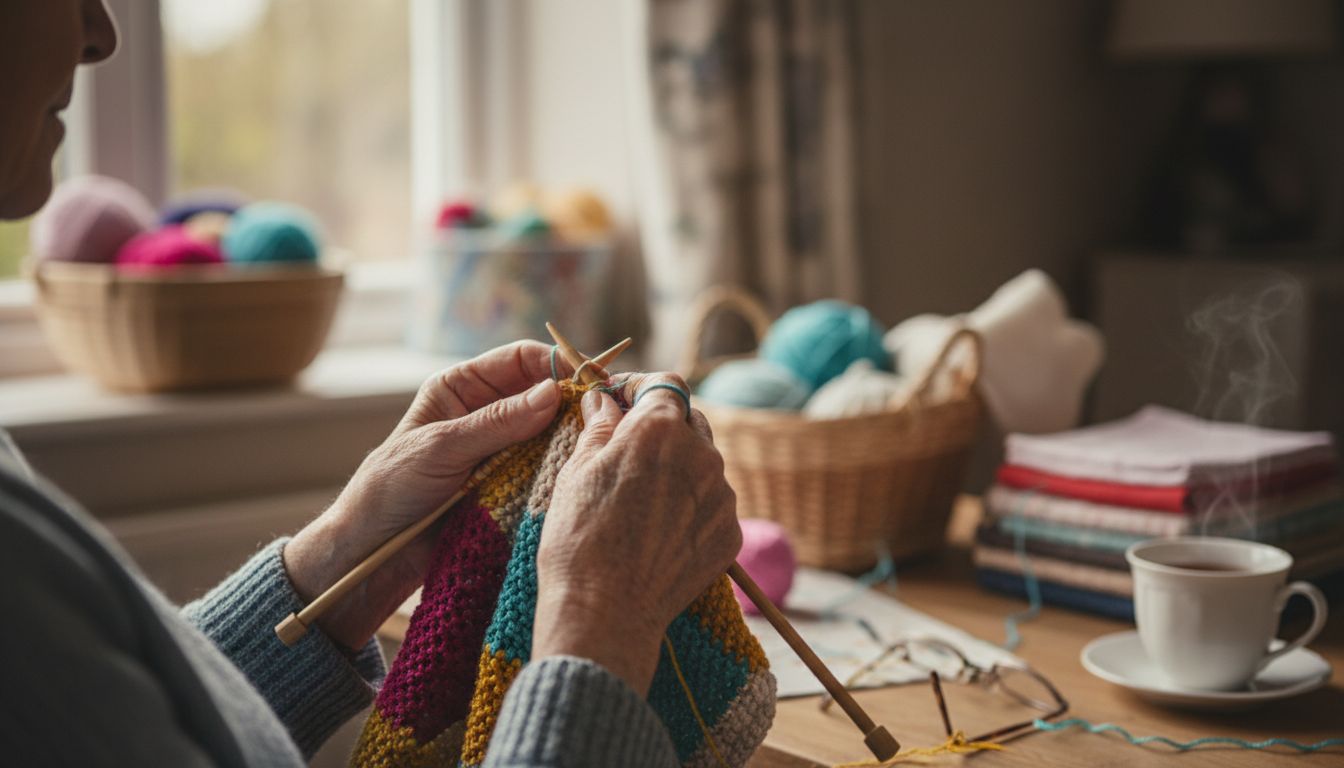
Mayo Clinic research shows crafts reduce dementia risk by up to 73%. From knitting circles to pottery classes, here's why getting creative might be the best thing you can do for your brain.
Your grandmother was right. All those hours she spent knitting, quilting, and pottering about with craft projects were not just a pleasant way to pass the time. They were, it turns out, some of the most powerful brain medicine available.
We live in an age obsessed with brain training apps, expensive supplements, and complicated cognitive exercises. Meanwhile, the humble knitting needle and paintbrush have been quietly outperforming them all. A landmark Mayo Clinic study found that engaging in arts and crafts during middle and later life reduced the risk of mild cognitive impairment by a staggering 73 percent. That is not a typo. Seventy-three percent.
So before you spend another penny on brain-boosting gimmicks, let us talk about why picking up a paintbrush, joining a pottery class, or learning to knit might be the single best investment you can make in your cognitive future.
Key Statistics
- 73%: Reduced risk of cognitive impairment from arts activities (painting, drawing, sculpting)
- 45%: Reduced risk from craft activities (woodworking, pottery, quilting, sewing)
- 30-50%: Overall reduction in dementia risk from combined mentally stimulating activities
- 256: Participants in the Mayo Clinic study, average age 87
- 4+ years: Duration participants were tracked to measure outcomes
The Mayo Clinic Evidence
This is not speculation. This is not wishful thinking from craft enthusiasts. This is peer-reviewed science from one of the world's most respected medical institutions.
In 2015, researchers at the Mayo Clinic published findings in the journal Neurology that should have made front-page news. They followed 256 adults with an average age of 87 and tracked their cognitive health over four years. The results were remarkable.
Arts activities (painting, drawing, sculpting) in both midlife and old age reduced the risk of mild cognitive impairment by 73 percent.
Craft activities (woodworking, pottery, ceramics, quilting, sewing) reduced the risk by 45 percent.
Computer use reduced the risk by 53 percent.
Social activities reduced the risk by 55 percent.
The researchers suggested these activities may protect neurons, encourage new neuron growth, or help recruit alternative neural pathways. In plain English: crafts keep your brain cells alive and help your brain find new ways to work.
Quick Answers About Crafts and Brain Health
Click any question to expand the answer
Why Crafts Work: The Science
So what is it about sitting with yarn and needles, or dabbing paint on canvas, that protects our brains so effectively? Several mechanisms are at play.
Hand-Eye Coordination
Crafts require precise movements coordinated with visual feedback. Knitting requires counting stitches, following patterns, and manipulating needles. Painting requires brush control, colour mixing, and spatial awareness. These activities fire multiple brain regions simultaneously, building and maintaining neural networks.
The Flow State
You know that feeling when you are so absorbed in an activity that time seems to disappear? Psychologists call this "flow." Crafters experience it regularly. Research from the University of Gothenburg found that knitters described their minds slowing down, racing thoughts quieting, and a sense of focused calm emerging. This meditative state reduces cortisol (the stress hormone) and promotes mental clarity.
Problem Solving
Every craft involves problem solving. A dropped stitch needs fixing. A colour palette needs balancing. A woodworking joint needs adjusting. These constant small challenges keep the brain engaged and flexible.
Social Connection
Craft groups provide something beyond the activity itself: belonging. The Alzheimer's Society highlights how creative groups create a sense of togetherness. You become "a knitter" or "a painter," part of a community with shared interests. For older adults, this social identity is profoundly protective against isolation and cognitive decline.
The Knitting Revolution
Knitting deserves special attention. Once dismissed as something grannies did, it is experiencing a renaissance as people discover its remarkable mental health benefits.
A 2024 study from the University of Gothenburg analysed 600 posts on the Ravelry knitting forum. The findings were striking. Participants reported:
- Preferring knitting over anti-anxiety medication
- Clearer, slower thinking during knitting sessions
- Reduced symptoms of depression
- Lower perception of chronic pain
- Structured daily routines that improved mental health
The repetitive, rhythmic nature of knitting appears to activate the parasympathetic nervous system, the body's "rest and digest" mode. It is meditation with a tangible outcome.
One occupational therapist involved in the research noted that knitting has the potential to "get people's lives working" and recommended its integration into healthcare for mental health support.
Crafts in Care Homes
For care home residents, creative activities are not optional extras. They are essential components of quality care.
The NHS explicitly recommends arts-based activities for people with dementia, including drawing, painting, drama, and book clubs. The Alzheimer's Society goes further, detailing specific activities that help maintain skills and self-confidence:
- Painting and drawing
- Playing musical instruments
- Knitting and sewing
- Writing and poetry
- Pottery and ceramics
What makes these activities particularly valuable in care settings is their adaptability. As dementia progresses, activities can be simplified. In later stages, sensory activities such as touching different textures, hand massage, and listening to music continue to provide stimulation and connection.
Craft Activities for Care Homes
Your progress is saved automatically. Check items off as you complete them!
Getting Started: Crafts for Every Ability
The beauty of crafts is that there is something for everyone, regardless of previous experience or physical limitations.
For Complete Beginners
Adult colouring books: No skill required. Provides the calming benefits of focused attention and colour selection without the pressure of creating from scratch.
Simple knitting: Learning to knit a basic scarf uses just two stitches. YouTube tutorials make it accessible to anyone.
Collage making: Cutting and arranging images from magazines requires no artistic skill but produces satisfying results.
Paint by numbers: Structured painting that guides you through the process while still engaging hand-eye coordination.
For Those With Limited Mobility
Seated crafts: Knitting, crochet, card making, and jewellery making can all be done while seated.
Large-scale painting: Bigger brushes and larger canvases require less fine motor control.
Clay modelling: Working with clay can be adapted for various ability levels.
Flower arranging: Satisfying and achievable with limited hand strength.
For Those With Dementia
Sensory crafts: Activities involving different textures, colours, and materials.
Simplified projects: Shorter activities with clear steps and immediate results.
Familiar crafts: Returning to activities from earlier life can tap into procedural memory.
Music and singing: The Alzheimer's Society's "Singing for the Brain" programme uses music as a form of creative engagement.
The Social Prescription
Here is something interesting: GPs can now prescribe creative activities. Social prescribing allows health professionals to refer patients to community-based support, including craft groups, art classes, and creative workshops.
This is not alternative medicine. It is recognition that health extends beyond pills and procedures. For older adults experiencing isolation, low mood, or early cognitive changes, a weekly pottery class might do more good than another medication.
The Alzheimer's Society, Age UK, and local community centres all run craft groups specifically designed for older adults. Many are free or low-cost.
Your Craft Journey
How to build creative activities into your life
Choose your craft
Pick something that appeals to you. It does not matter if you have never tried it before.
Gather supplies
Start simple. A basic knitting kit, a sketchpad and pencils, or air-dry clay costs very little.
Find a group
Search for local craft groups through Age UK, libraries, or community centres.
Build a routine
Set aside regular time for crafting. Even 20 minutes daily makes a difference.
Expand and share
Try new techniques, teach others, or display your work. Enjoy the journey.
The Bottom Line
We spend billions on healthcare trying to fix problems after they occur. Meanwhile, the evidence is clear: simple, enjoyable, accessible activities like knitting, painting, and pottery can prevent cognitive decline more effectively than most interventions.
The Mayo Clinic researchers put it plainly: you do not need specialised tools or expensive equipment. You do not need to start young. You do not need to be talented. You just need to engage your brain in creative, hands-on activities.
Your grandmother, with her knitting needles clicking away in front of the television, was not wasting time. She was protecting her brain, reducing her stress, maintaining her dexterity, and probably outliving people who thought they were too busy for such "old-fashioned" pursuits.
The craft renaissance is not nostalgia. It is science. And it is available to everyone, regardless of age, ability, or experience.
Pick up those needles. Grab that paintbrush. Join that pottery class. Your brain will thank you.
Sources
17 SourcesPrimary Research Sources
2015
- Study of 256 adults, average age 87, tracked over 4+ years
- Arts reduced MCI risk by 73%, crafts by 45%
- Published in the journal Neurology
2015
- Press release for Roberts et al. study
- Details on specific activities and risk reduction percentages
2019
- Krell-Roesch et al. study on combined activities
- Found two or more activities lowered MCI risk in those 70+
2009
- Geda et al. study of 1,300+ participants aged 70-89
- Reading, games, computer activities, and crafting reduced MCI risk by 30-50%
Mental Health and Knitting Research
2024
- Analysis of 600 Ravelry forum posts
- Published in Journal of Occupational Science
- Lead researcher Joanna Nordstrand, occupational therapist
2024
- Coverage of University of Gothenburg research
- Details on flow state and anxiety reduction
2024
- Additional coverage of knitting and mental health benefits
- Quotes from occupational therapy researchers
- Overview of knitting and cognitive health research
- Discussion of hand-eye coordination benefits
UK Health and Care Sources
- Comprehensive guide to activities including crafts
- Recommendations for painting, knitting, music, writing
- Guidance on adapting activities for different stages of dementia
- Official NHS guidance on activities
- Recommendations for arts-based activities, social activities
- Information on dementia-friendly venues and events
- Research on mentally stimulating activities and dementia risk
- Evidence-based guidance on cognitive engagement
- Music-based activity programme
- Evidence for singing improving mood and wellbeing
Additional Research Sources
- Healthcare perspective on yarn crafts
- Discussion of stress reduction and depression benefits
2017
- Summary of research on knitting and cognitive protection
- Discussion of benefits at different dementia stages
- Information on local craft groups and activities for older adults
- Social prescribing and community engagement
- Music and dementia charity
- Evidence for personally meaningful music
- Activity-based breaks for people with dementia
- Creative and outdoor activities
Related Articles
REGIONAL BREAKDOWN: London pays highest but still below minimum required
New analysis reveals regional variations in funding crisis with London paying £26.83/hr (highest) but still falling short of £32.23/hr needed.
Policy Response: Government announces funding review
Minister responds to crisis with comprehensive review of home care funding structure.