The Protective Ring That Never Was: The Covid Inquiry's Verdict on Care Homes

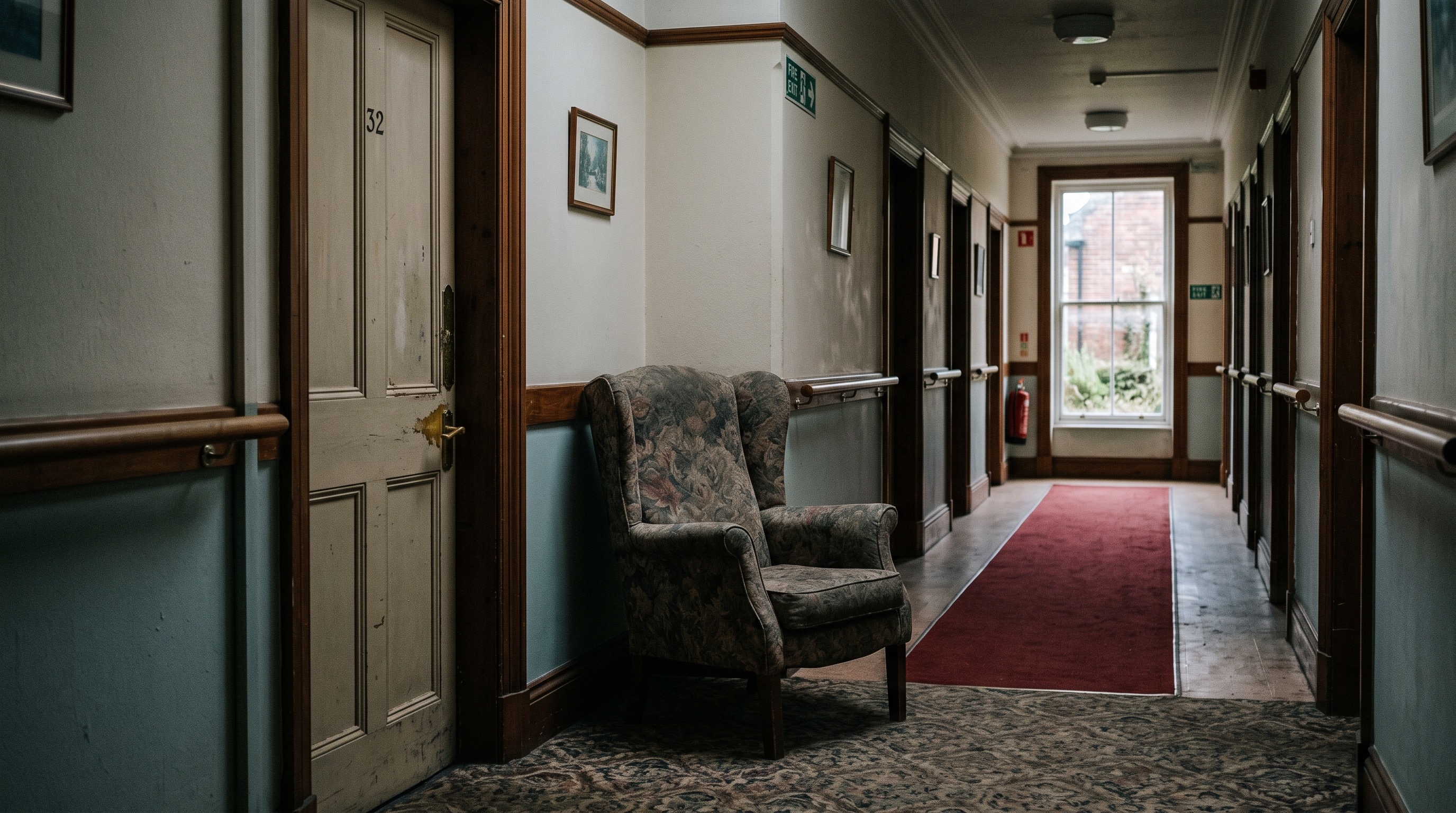
The Covid inquiry's new report, out today, says the government protected hospitals first and treated care homes as an afterthought, letting Covid spread 'like wildfire'. More than 43,000 residents died. Matt Hancock's 'protective ring' promise? The ring never existed.
Key Findings
UK care home deaths involving Covid-19 (March 2020 to July 2022)
Hospital patients discharged into England's care homes before testing (17 March to 15 April 2020)
of 3,595
Scottish discharges into care homes never tested (to 21 April 2020)
If a freight company loaded its most fragile cargo onto trucks without knowing whether the crates were cracked, and more than 43,000 of those crates shattered within two years, we would call it criminal negligence. If the chairman then stood at a podium and insisted that, right from the start, his staff had wrapped every crate in protective packaging, while the company's own paperwork showed the packaging arrived six weeks after the trucks had left the depot, we would call it a lie.
The UK Covid-19 Inquiry has now, in effect, confirmed both. In its sixth report, Module 6: Care Sector, published today, Tuesday 20 October 2026, the Inquiry chair, Baroness Heather Hallett, found that the adult social care sector was treated as "something of an afterthought" at the critical early stages of the pandemic, and that the mantra of "protecting the NHS" sometimes came at the direct expense of the people receiving and providing care.
The report is unsparing. It records 43,088 deaths involving Covid-19 in UK care homes between March 2020 and July 2022. Not 43,000. Forty-three thousand and eighty-eight. Government failures, it finds, created environments in which the virus could spread like wildfire.
Key Statistics
- 43,088: Deaths involving Covid-19 in UK care homes between March 2020 and July 2022
- 25,000: Hospital patients discharged into England's care homes between 17 March and 15 April 2020, before discharge testing began
- 82%: Share of the 3,595 patients discharged into Scottish care homes by 21 April 2020 who were never tested for the virus
- Mid-April 2020: When testing of all hospital discharges into care homes in England actually began
- Mid-May 2020: When the Infection Control Fund was introduced, roughly five weeks after the first wave of untested discharges
- 26,500: Do not attempt cardiopulmonary resuscitation (DNACPR) orders in place by late 2020, up from 16,800 nine months earlier
- 5.8 million: Unpaid carers in the UK whose pandemic support, in the Inquiry's words, came too late
The Rhetoric and the Record
On 15 May 2020, Matt Hancock stood at the Downing Street podium and said: "Right from the start, we've tried to throw a protective ring around our care homes."
The Inquiry's verdict on that sentence, published today, could not be more direct. The statement "does not accurately reflect the lack of action taken" to protect care homes at the outset of the pandemic. Testing of all people discharged from hospital into care homes only began in mid-April 2020. The Infection Control Fund was introduced in mid-May 2020. The NHS's infection prevention and control training for the sector also took place in May 2020. In the report's blunt summary, the claim that a so-called "protective ring" had been thrown around care homes "right from the start" was unfounded. Quite the opposite was true.
Mr Hancock told the Inquiry the phrase was "clearly a piece of rhetoric" and "a form of words rather than the substance". In behavioural science we would call this the gap between the say and the do. Bereaved families, who have waited more than six years for the formal finding, called it something else entirely.
Jean Adamson, speaking for Covid-19 Bereaved Families for Justice UK and whose father, Aldrick "Cleo" Adamson, a Windrush pioneer from Barbados, died in a care home on 15 April 2020, did not mince words: "Today's report is a devastating account of one of the darkest episodes in our country's history. It shows that the government knew the care sector was extremely vulnerable to a pandemic and yet did nothing. Failing to act until it was too late. And it shows that Matt Hancock's claim to have thrown a protective ring around care homes was a cruel lie."
This is not a semantic quarrel over one sentence at one press conference. The words mattered because they described a protection that thousands of families were watching fail in real time. The High Court had already ruled, in April 2022, that the discharge policy that emptied untested hospital patients into care homes was unlawful. Mr Hancock declined to comment on the new report; he has previously defended his handling of an "impossible" situation, and told the 2025 hearings that the discharges were "the least worst solution to this terrible problem".
The Mantra and the Afterthought
The report's central structural finding is simple and devastating. During the crucial weeks of March and early April 2020, the overriding focus of the UK government and the devolved administrations was on protecting hospitals. Baroness Hallett, a retired Court of Appeal judge, put it plainly: "At the critical early stages of the pandemic, not enough was done to protect those living and working in care homes. The mantra at the time of 'protecting the NHS' sometimes came at the expense of the users and providers of care. The adult social care sector as a whole appeared to be something of an afterthought."
The scale of what was being deprioritised is the part that should stop every reader. At the pandemic's start, roughly 500,000 people lived in UK care homes, with around one million more receiving care at home. That is the population of a major city, plus another the size of Birmingham, being managed as a rounding error. And the vulnerability was not a surprise: "The UK government and devolved administrations knew, prior to the Covid-19 pandemic, of the extreme vulnerability of care home residents to respiratory viruses. Despite this, care homes received insufficient protection at the time they most needed it."
The report notes that the high number of deaths in April 2020 finally brought care homes into "sharp focus", but the shift in focus came too late. Protective measures should have been in place at the start of a pandemic, not once it had already taken hold.
In plain English: the risk was documented, the population was quantified, and the plan still did not include them. In the aviation industry, learning happens after a crash, and every finding is published so the same crash never happens twice. Britain ran a pandemic exercise, Exercise Cygnus, in 2016, which identified the social care gap; the recommendations were never completed. We had the crash report before the crash, and we shelved it.
Caroline Abrahams CBE, Charity Director of Age UK, said the report is, in its own way, quietly devastating: "It describes what in truth we already knew: that when Covid-19 took off, people using social care, and the staff and unpaid carers providing it, were left totally exposed." Professor Nicola Ranger, General Secretary of the Royal College of Nursing, went further: the report is a "damning assessment of how social care was so badly failed", demonstrating that vulnerable people and staff in social care were considered "second class citizens".
The Wildfire and the 25,000
The mechanism of the catastrophe is set out without flinching. Around 25,000 hospital patients were discharged into care homes in England between 17 March and 15 April 2020, at a point when there was not enough testing capacity to know whether they carried the virus. Guidance issued on 2 April 2020 confirmed that negative tests were not required prior to transfers into care homes. The report finds that the failure to advise isolation for admissions was "a significant omission", and that these failures created environments in care settings in which the virus could spread like wildfire.
Scotland tells the same story in sharper relief. Of the 3,595 patients discharged from Scottish hospitals into care homes between 1 March and 21 April 2020, 82% were never tested. Scotland was nonetheless the first UK nation to advise isolating all new admissions, on 26 March; England followed on 15 April, Wales on 22 April, and Northern Ireland on 26 April. Dr Donald Macaskill, Chief Executive of Scottish Care, said the report is "a sobering and at times deeply painful read", in which "social care was too often treated as an afterthought rather than as an equal partner within our system of public protection".
Behind the percentages sit human arithmetic that no table should have to hold. One care home in Durham lost 25 residents in three weeks. At the height of the outbreak, 67 of its 87 residents tested positive. One home lost half its residents in three weeks. In one Welsh home, 39 staff moved in and lived on site for a fortnight to keep the residents they loved alive.
At the Module 6 hearings in June 2025, Pete Weatherby KC, counsel for Covid-19 Bereaved Families for Justice UK, read from the witness statement of Alasdair Donaldson, an expert seconded to the Department of Health and Social Care's adult social care team, who described what was unfolding as "a generational slaughter within care homes, many of those victims dying horrible deaths, often without the solace of their loved ones".
Bin Bags, Ponchos and Leggings
The report finds there was a "severe shortage" of PPE supplies for the adult social care sector, leaving workers in a "wholly unacceptable position" where they had to work in either poor-quality PPE or with no PPE at all. What that looked like on the ground is documented in the workers' own words. Some care workers reported using "festival waterproof ponchos", painters' overalls, and gloves purchased from Amazon, DIY shops and other retailers. Others fashioned home-made PPE from fabric, bin bags, bed linen and other household items. Some used laminated plastic to make face masks and elastic from leggings to tie them around their heads.
This was the personal protective equipment of a G7 nation in the twenty-first century: ponchos and bin bags, held together with elastic cut from leggings. Around 1.5 million care workers, many of whom, in the Inquiry's words, put their own lives at risk, were left to improvise the protection the state could not supply. And when some of those workers died, their deaths were not centrally recorded. The same nation that stood on its doorsteps on Thursday evenings clapping for carers could not, in those same months, supply those carers with a surgical gown. The applause was real. The protection was not. This is not gratitude. It is a substitute for it.
Becoming Prisons
The Inquiry heard evidence that care homes "became prisons" for some residents during the visiting restrictions that sealed residents off from their families. The report's finding on the consequences is among its most painful: "Preventing visits caused incalculable harm to residents and their loved ones and often resulted in a significant decline in the health and wellbeing of residents, especially those with complex cognitive conditions such as dementia."
Baroness Hallett reserved some of her strongest words for this dimension of the failure: "The profound isolation and sense of abandonment felt by residents as a result of the visiting restrictions resulted in immense emotional harm. Most distressingly, some people were not permitted to be with their dying loved ones. Many remain wracked by a guilt that they do not deserve to carry."
Alongside the visiting bans sits the DNACPR scandal. Do not attempt cardiopulmonary resuscitation decisions made during the pandemic based on a person's age, disability or health conditions, or without a personalised assessment that considered the person's wishes and feelings, caused, the Inquiry finds, "considerable distress and confusion for the individual, their loved ones and staff". The Inquiry found no evidence of a national blanket policy, but it did find evidence of GPs imposing blanket DNACPRs. DNACPR orders rose from 16,800 to 26,500 within the first nine months. In plain English, in some surgeries, decisions about who would be resuscitated were made by category rather than by person. This is triage by stereotype, and the distress it caused has outlasted the pandemic itself.
The Unpaid Army
The report devotes sustained attention to the approximately 5.8 million unpaid carers across the UK, more people than the combined populations of Wales and Northern Ireland, who faced having to give more complex care for longer hours, with less, if any, respite care. The impact of the pandemic on them, the Inquiry finds, was pronounced, and support came too late.
These are the partners, sons, daughters and neighbours who quietly absorbed the care the formal system had deprioritised. While the state's attention was fixed on hospital capacity, the state's most fragile citizens were being looked after in family kitchens and spare rooms, by people who received neither protection, recognition nor relief on time. We do not count them in the headline figures. The Inquiry makes clear that we should.
The Four Nations and Anne's Law
The report covers all four nations, and the comparisons are instructive rather than exculpatory. Wales, the Inquiry notes, delayed changes to care workers' sick pay until November 2020, while other governments acted between March and May 2020. Every nation shared the same structural failure: adult social care as the afterthought.
Scotland, however, is singled out for one lesson worth copying. Anne's Law, passed in the Care Reform (Scotland) Act 2025 and named after Anne Duke, guarantees care home residents a right to maintain contact with the relatives who matter to them, so that visiting can never again be switched off wholesale in a crisis. Baroness Hallett recommends that the UK and Welsh governments and the Northern Ireland Executive consider equivalent legislation. When the Inquiry tells three governments to copy a law named after a woman whose family's loss became the shield for other families, the argument has been made. The only question is whether it is heard.
What Needs to Happen
The report makes eight recommendations, and the sector's reaction makes clear that the binding constraint is not knowledge but implementation. Matthew Fowler, co-founder of Covid-19 Bereaved Families for Justice UK, said the findings "vindicate everything we have been saying for the last six years", while warning that the government is "only on track to implement around 20%" of the Inquiry's earlier recommendations. The necessary agenda is not mysterious:
Legislate the Right to Visit: Every UK nation should adopt Anne's Law equivalents, so no resident is again denied the presence of loved ones, including at the end of life.
Plan for Two Systems, Not One: The next pandemic plan must treat adult social care as an equal partner with the NHS, with protective measures ready at the start of an outbreak, not once it has taken hold. Exercise Cygnus identified this gap in 2016; the next plan must close it.
Test and Isolate From Day One: Every hospital discharge into a care setting must be tested and isolated from the first day of any outbreak. Mid-April is not day one.
Supply and Count the Workforce: The 1.5 million care workers who were left in ponchos and bin bags must never be there again, PPE stockpiles must include social care from the outset, and care worker deaths must be centrally recorded. What is not counted cannot be learned from.
Support the Unpaid Army: The 5.8 million unpaid carers whose support came too late need respite guarantees that activate automatically in any national emergency, not discretionary schemes that arrive after the exhaustion.
In the Commons, Health Secretary Yvette Cooper responded: "My thoughts are with all those who lost loved ones, especially those who endured the immense distress and harm of visiting restrictions in care homes, which meant they could not be with loved ones, even as they died." She promised a full government response in due course, and the Prime Minister has committed to developing an Adult Social Care Pandemic Action Plan from the findings. Due course has a specific meaning in Westminster: too often, it is where reports go to be quietly forgotten.
The protective ring was never a policy. It was a sentence, spoken on 15 May 2020, weeks after the wildfire had already taken hold. The virus did not treat care homes as an afterthought. Governments did, in rooms where the plans on the walls were drawn for hospitals. With 43,088 reasons now on the public record, the next pandemic will remove the last excuse, that nobody knew. Whether the next plan is written for the whole system or, once again, only for the hospitals is not fate. It is a choice.
Key Data Summary
| Metric | Figure |
|---|---|
| UK care home deaths involving Covid-19 (March 2020 to July 2022) | 43,088 |
| Hospital patients discharged into England's care homes before testing (17 March to 15 April 2020) | ~25,000 |
| Scottish discharges into care homes never tested (to 21 April 2020) | 82% of 3,595 |
| Testing of all hospital discharges began (England) | Mid-April 2020 |
| Infection Control Fund introduced | Mid-May 2020 |
| DNACPR orders, first nine months of the pandemic | 16,800 to 26,500 |
| UK unpaid carers | 5.8 million |
| People living in UK care homes at the pandemic's start | ~500,000 |
| People receiving care at home | ~1 million |
| Report scope | 287 pages, 57 witnesses, 8 recommendations |
Methodology
This analysis draws on:
- UK Covid-19 Inquiry, Module 6: Care Sector (HC 645) (20 October 2026): findings, statistics and direct quotations from the report and its chair, Baroness Heather Hallett, covering care homes, domiciliary care and unpaid care across England, Scotland, Wales and Northern Ireland
- Official Inquiry news release (20 October 2026): verified statements including "something of an afterthought", the "protective ring" finding, and the discharge testing timeline
- Module 6 hearings record (30 June to 31 July 2025): 57 witnesses, including the witness statement of Alasdair Donaldson quoted in submissions by Covid-19 Bereaved Families for Justice UK
- Office for National Statistics care sector mortality releases (February 2022 and March 2023): deaths involving Covid-19 in care settings in England and Wales
- Government and devolved responses (20 October 2026): Cabinet Office publication, GOV.WALES written statement and Public Health Wales statement
- Judicial context: the April 2022 High Court ruling on the unlawfulness of the hospital discharge policy
All figures are reported as stated by the Inquiry, the Office for National Statistics or the verified news coverage cited below. The ~25,000 discharge figure is the England total for 17 March to 15 April 2020 as reported and verified by BBC Verify. Dates refer to UK government guidance timelines unless otherwise noted.
Sources
24 SourcesPrimary Sources
20 October 2026
- 287-page sixth report, HC 645, presented to Parliament under the Inquiries Act 2005
- 8 recommendations covering care homes, domiciliary care and unpaid care across all four nations
- Findings: sector "something of an afterthought", no "protective ring", visiting bans caused "incalculable harm"
web version
- Chapter findings including the March and early April 2020 focus on protecting hospitals
- Testing of hospital discharges began mid-April 2020; Infection Control Fund introduced mid-May 2020
20 October 2026
- Official news release with Baroness Hallett's statement
- Confirms the discharge decision was taken when there was not enough testing capacity to know patients' Covid-19 status
- PPE findings including festival ponchos and home-made PPE from bin bags and bed linen
13 June 2025
- Bereaved families' opening submissions to the Module 6 hearings
- Context for the "cruel lie" response and the "generational slaughter" evidence
Module 6
- Confirms the 20 October 2026 publication date
Government Sources
Cabinet Office
- The Parliament-presented version of the report
20 October 2026
- First Minister Rhun ap Iorwerth's response, including the delayed care-worker sick pay changes noted in the report
20 October 2026
- Welsh health system response to the report's findings
accessed 20 October 2026
- Publication dates of all reports to date, Module 1 (July 2024) through Module 6 (October 2026)
News Coverage
20 October 2026
- Live coverage including Yvette Cooper's Commons statement and Matthew Fowler's response
- DNACPR figures rising from 16,800 to 26,500 in the first nine months
- Scale: ~500,000 people in care homes and ~1 million receiving care at home
- Human detail including the Durham home that lost 25 residents in three weeks
Nick Triggle
- Analysis of the report's findings on discharges, PPE and visiting restrictions
Jessica Murray
- Jean Adamson's "cruel lie" response and the 43,000 deaths figure
- Reporting of the Inquiry's cost, more than £200 million
PA and Aine Fox
- The 15 May 2020 press conference claim and the finding that it "does not accurately reflect the lack of action taken"
- Testing began mid-April 2020; Infection Control Fund introduced mid-May 2020
Athena Stavrou
- Detailed key findings including unpaid carers and DNACPR
- Nicola Brook's "superficial damp squib" criticism of the report
Martin Bagot
- The ~25,000 untested discharges in England between 17 March and 15 April 2020
Martin Bagot
- Identifies Alasdair Donaldson's witness statement, quoted by Pete Weatherby KC
- First wave context: ~66,000 total care home deaths between March and June 2020
Andrew Learmonth
- 4,272 Scottish care home deaths involving Covid-19
- 3,595 discharges to 21 April 2020, 82% untested
- Scotland first to advise isolating all admissions, on 26 March
- Anne's Law in the Care Reform (Scotland) Act 2025
PA Media, Aine Fox and Ella Pickover
- April 2020 deaths brought care homes into "sharp focus", but the shift in focus came too late
Robert Booth
- The High Court ruling that the March 2020 discharge policy was unlawful
- The 2 April 2020 guidance confirming negative tests were not required prior to transfers
Sector and Charity Responses
20 October 2026
- Caroline Abrahams CBE: "quietly devastating"; social care treated as a "second-class citizen"
20 October 2026
- Professor Nicola Ranger: vulnerable people and staff considered "second class citizens"
18 August 2026
- Dr Jane Townson's evidence to Module 6 and the domiciliary care perspective
Data Sources
28 February 2022
- 45,632 of 274,063 care home resident deaths in England and Wales (March 2020 to January 2022) involved Covid-19, 16.7%
final
- Baseline mortality for UK care homes before and during the pandemic
Related Articles
REGIONAL BREAKDOWN: London pays highest but still below minimum required
New analysis reveals regional variations in funding crisis with London paying £26.83/hr (highest) but still falling short of £32.23/hr needed.
Policy Response: Government announces funding review
Minister responds to crisis with comprehensive review of home care funding structure.